
Recommended tools
Software deals worth checking before you buy full price.
Browse AppSumo for founder tools, AI apps, and workflow software deals that can save real money.
Affiliate link. If you buy through it, this site may earn a commission at no extra cost to you.
⏱ 19 min read
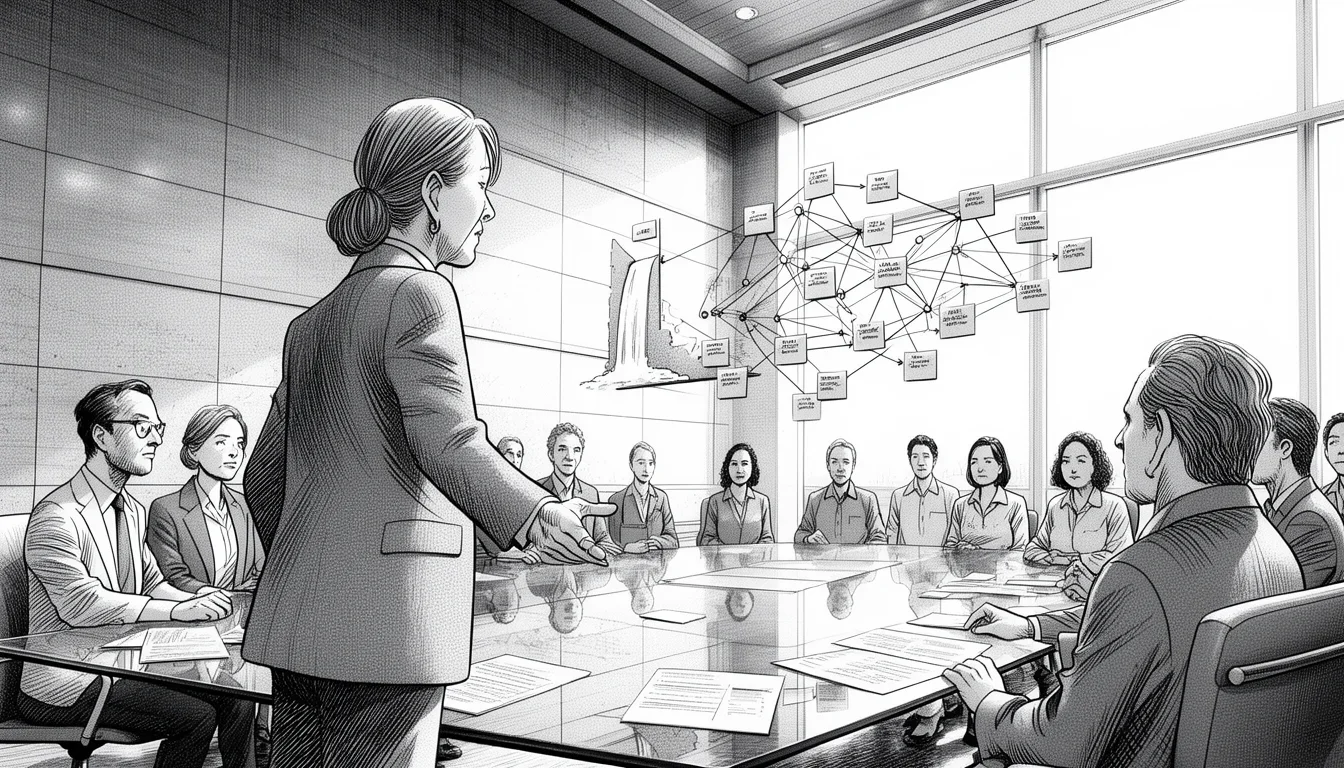
You cannot simply swap the swimlanes on your Gantt chart and expect the new approach to work. Moving from Waterfall to Agile Business Analysis Activities requires a fundamental shift in how you perceive requirements, not just how you schedule them. In a Waterfall world, a requirement is a static document signed off in month three. In Agile, a requirement is a hypothesis validated in week two. If your team is treating user stories as if they were chapters in a textbook, you are fighting a losing battle against change.
The friction usually isn’t the methodology itself; it’s the mental model of the Business Analyst (BA). Many practitioners cling to the comfort of the “gated” process because it feels controllable. It feels like you know exactly what is happening. Agile feels chaotic until you realize that the chaos is actually discovery, and the only thing you can control is the speed at which you learn from it.
This guide cuts through the management buzzwords to show you the actual mechanics of the transition. We are looking at the shift from upfront documentation to collaborative refinement, the specific changes in stakeholder engagement, and the hard truths about what gets lost and what gets found when you stop waiting for the “perfect” spec.
Why Your Current Process Is Creating Technical Debt
The most common reason organizations fail to move from Waterfall to Agile Business Analysis Activities is that they keep the Waterfall BA mindset inside an Agile container. You have two-week sprints, but you still demand a 50-page requirements document before the first line of code is written. You call it “planning,” but it’s actually a defensive mechanism to prevent scope creep.
In Waterfall, the BA acts as a translator converting vague business needs into rigid technical specs. In Agile, the BA acts as an investigator, working alongside developers to uncover the real problem, not just the symptoms. When you insist on a complete solution upfront, you are betting on your current understanding of the future. That bet almost always loses.
Consider a banking project where the goal was to “streamline loan approval.” In Waterfall, the BA interviewed five stakeholders, wrote a document specifying exact interest rate calculations, and sent it for sign-off. Three months later, the development team built the system. The stakeholders realized the real need was to reduce the time it takes to gather documents from the borrower, not to calculate the rate faster. The system was useless for the actual business goal because the “solution” was fixed before the “problem” was fully understood.
Moving from Waterfall to Agile Business Analysis Activities means admitting that you don’t know the solution yet. You are building a car, but you haven’t decided what features the passengers actually need until you take them for a test drive. The BA’s job changes from “documenting the car” to “driving the car and listening to the passengers.”
This shift is uncomfortable. It feels like losing control. But control in Waterfall is an illusion; it’s just the illusion of certainty. In Agile, certainty comes from feedback loops. The sooner you get feedback, the less money you waste building things nobody wants.
The Trap of “Done” vs. “Shippable”
A critical distinction in this transition is the definition of “done.” In Waterfall, “done” means the document is approved. In Agile, “done” means the software is tested, integrated, and potentially shippable to the user.
When you try to force Agile sprints to adhere to Waterfall documentation standards, you create a bottleneck. The development team spends three days coding, and the BA spends two days writing the documentation. The product owner reviews the code, but the documentation is still “in progress.” By the time the BA signs off, the sprint is over, and the team has moved on to new stories.
True Agile Business Analysis Activities happen concurrently with development. The BA and the developer are refining the same story. The BA is writing the acceptance criteria, but they are doing it while looking at the wireframes, talking to the developer about edge cases, and verifying the logic with the user. This parallel work stream is what accelerates delivery. It is not a sequential handoff.
Key Insight: The biggest resistance to moving from Waterfall to Agile Business Analysis Activities comes from BAs who feel their primary value is the quality of the written document. In Agile, value is delivered through working software, not documentation. Documentation supports the software; it does not replace it.
Redefining the Requirements Artifact: From Specs to Conversations
If you are used to writing requirements specifications, you are likely struggling with the concept of the “User Story.” It is not a sentence in a database; it is a placeholder for a conversation. A Waterfall spec is a contract. An Agile user story is a promise to discuss.
The format of the user story is simple: As a [role], I want [feature], so that [benefit]. But the magic happens in the “so that” and the acceptance criteria. In Waterfall, the acceptance criteria are exhaustive lists of conditions. In Agile, they are scenarios that cover the happy path and the most critical failure modes.
When you move from Waterfall to Agile Business Analysis Activities, you stop trying to predict every possible user interaction. You focus on the core value. If a user can achieve their goal in the standard flow, the system is valuable. If they can’t, the system is broken, regardless of how many other features it has.
Acceptance Criteria: The Real Work
The acceptance criteria are where the rubber meets the road. They must be clear, testable, and agreed upon by the Product Owner (PO) and the team.
In a Waterfall environment, these criteria are often vague because the document is meant to cover everything. In Agile, they are specific because they are meant to define the boundary of the current sprint.
Here is a comparison of how acceptance criteria shift in this transition:
| Feature | Waterfall Acceptance Criteria | Agile Acceptance Criteria | Why It Matters |
|---|---|---|---|
| Scope | Covers 100% of potential use cases, including rare edge cases. | Covers the “Must Have” scenarios and top 3 edge cases. | Prevents scope creep in the current sprint. |
| Granularity | High-level functional descriptions and logic flows. | Step-by-step user actions and expected system responses. | Allows developers to code without ambiguity. |
| Review Timing | Reviewed once, during the requirements phase. | Reviewed continuously, updated in every refinement session. | Ensures criteria stay aligned with current understanding. |
| Ownership | Owned by the BA, signed off by the PM. | Owned jointly by the BA, PO, and Team. | Creates shared accountability for quality. |
The table above highlights the shift from a static, comprehensive document to a dynamic, focused set of rules. In Waterfall, if you missed an edge case, it was a failure of the BA. In Agile, if you miss an edge case, you discover it in production, which is a failure of the process. The goal of Moving from Waterfall to Agile Business Analysis Activities is to catch those edge cases before the code is merged, not after the user complains.
This means the BA must be comfortable with ambiguity. They cannot say, “We will know the answer in the next phase.” They must say, “We are guessing this, but we will validate it in two weeks. If we are wrong, we pivot.”
The Role of the Product Owner
In Waterfall, the “Product Owner” role often doesn’t exist; the stakeholder is just a stakeholder. In Agile, the Product Owner is the single source of truth. They make the trade-off decisions.
When you move from Waterfall to Agile Business Analysis Activities, the BA’s relationship with the PO changes. In Waterfall, the BA gathers requirements from the PO and translates them for the dev team. In Agile, the BA works with the PO to define the requirements.
The PO knows the business value. The BA knows the technical constraints and user experience implications. Together, they craft the stories. If the BA tries to act as a gatekeeper, protecting the PO from “bad ideas,” they will fail. Their job is to help the PO understand the cost of a feature. “If we build this, we can’t build that, and the launch date moves by three weeks.”
This negotiation is the heart of Agile Business Analysis. It is less about writing and more about influencing. It requires the BA to be a strategist, not just a scribe.
The Refinement Session: Where the Magic Happens
In Waterfall, refinement happens once: during the requirements gathering phase. In Agile, refinement is a continuous activity that happens every two weeks during sprint planning. This is the most practical area for Moving from Waterfall to Agile Business Analysis Activities.
The refinement session is a workshop where the BA, PO, and lead developers break down high-level epics into actionable user stories. The goal is not to finalize the requirements but to make them ready for development. A story is “ready” when the team understands what to build, how to test it, and how to deploy it.
The Anatomy of a Good Refinement
A successful refinement session looks like this:
- Reviewing the Backlog: The PO presents the top priority epics. The BA explains the business context.
- Breaking Down Stories: The team discusses how to split the epic into stories small enough to be completed in a sprint.
- Defining Acceptance Criteria: The BA drafts the criteria. The team challenges them. The PO confirms they align with business value.
- Estimating Effort: The team assigns story points. The BA ensures the scope matches the estimate.
- Identifying Risks: The team flags dependencies or technical unknowns.
If you are used to Waterfall, this process feels inverted. You are not waiting to write the spec; you are writing the spec while estimating. This is the crux of the transition. In Waterfall, estimation is a guess based on a plan. In Agile, estimation is a conversation based on the work itself.
The “Definition of Ready” (DoR)
To make refinement effective, your team needs a Definition of Ready. This is a checklist that a story must pass before it enters the sprint.
- User Story Format: Is it written in the “As a… I want… So that…” format?
- Acceptance Criteria: Are the criteria clear and testable?
- Mockups/Wireframes: Are the visual aids available (if needed)?
- Dependencies: Are there no hidden dependencies on other teams?
- Stakeholder Alignment: Has the PO confirmed the priority?
Without a DoR, you will find stories entering the sprint that are too vague. The developers will spend the first two days clarifying requirements, which kills the velocity. This is a common pitfall when Moving from Waterfall to Agile Business Analysis Activities. Teams think they are doing Agile but are just sprinting with Waterfall requirements.
The BA is the guardian of the DoR. If a story doesn’t meet the criteria, it goes back to the backlog. It is not a rejection; it is a protection of the team’s focus.
Caution: Do not allow “polishing” stories during the sprint. If a story needs more detail, it belongs in the next refinement session. Mixing new definition work with development work destroys the team’s flow and increases cognitive load.
Stakeholder Engagement: From Reporting to Partnering
In Waterfall, the BA reports to the stakeholders. You tell them the plan, you tell them the status, and you ask for sign-off. If there is a problem, you present it as a risk. In Agile, the BA partners with the stakeholders. You show them the work, you invite their feedback, and you adjust the plan based on that feedback.
This shift is often the hardest for stakeholders to accept. They are used to receiving a finished product at the end of the project. In Agile, they receive a working prototype every two weeks. They have to get used to the idea that the product evolves, rather than being revealed in a single moment of grandeur.
Daily Stand-ups and the BA Role
The daily stand-up is a ritual many BAs ignore. In Waterfall, the BA attends a status meeting once a week. In Agile, the BA should be present at the daily stand-up to answer questions about requirements immediately.
If a developer asks, “What does this field do exactly?” and the BA is not there, the developer has to wait until the next meeting or the next email thread. This delay creates friction. By being present, the BA clears blockers instantly. The team can keep moving.
However, the BA should not dominate the stand-up. The purpose of the stand-up is for the team to synchronize. The BA’s role is to provide context, not to micromanage.
Demo Sessions: The New Gate
In Waterfall, the “gate” is the final review. In Agile, the gate is the sprint demo. Every two weeks, the team demonstrates the working software to the stakeholders. This is where the BA shines.
During the demo, the BA guides the stakeholders through the new features. They explain the “why” behind the changes. They show the “before and after” scenarios. This transparency builds trust. Stakeholders see that the team is delivering value, not just writing code.
If the stakeholders say, “I don’t like this,” the BA does not argue. They ask, “What would you prefer?” and the team decides if that change fits in the next sprint. This iterative feedback loop is the engine of Agile. It moves the organization from “build what we think you want” to “build what you actually need.”
Practical Tip: Schedule demos when stakeholders are available, not when the team is free. The value of the demo is the stakeholder’s input, not the team’s presentation. If the stakeholder is busy, the demo is useless.
Common Pitfalls in the Transition
Moving from Waterfall to Agile Business Analysis Activities is not a smooth slide; it is a bumpy ascent. You will encounter specific traps that can derail the effort. Recognizing them early is key to survival.
The “Big Bang” Documentation Attempt
One of the most common mistakes is trying to write all the documentation at the start of the transition. You cannot. You will run out of content, and the team will wait for you to finish.
Instead, adopt a “Just-In-Time” documentation approach. Write the requirements when they are needed, not when they are convenient. If the team needs to know how a specific feature works to code it, that is when you write the acceptance criteria. This keeps the documentation fresh and relevant.
The “Agile Theater” Trap
Another pitfall is adopting the rituals without the mindset. You hold daily stand-ups, but you still have a detailed Gantt chart. You have user stories, but you still demand a 100% complete spec before coding. This is “Agile Theater.” It looks like Agile, but it feels like Waterfall.
True Agile Business Analysis Activities require a shift in culture. The team must trust that they can deliver value without a perfect plan. The BA must trust that the team can figure out the details as they go.
Ignoring the “Why”
In Waterfall, the “what” and “how” are the focus. In Agile, the “why” is paramount. If the team builds a feature but doesn’t understand the business value, they will build it poorly.
The BA must constantly remind the team of the “why.” Why are we building this login feature? To reduce security risks. Why is this report needed? To help the sales team close deals faster. Without this context, the team is just following orders, not solving problems.
The “Scope Creep” Fear
Many BAs fear that Agile means unlimited scope. It does not. Agile means prioritized scope. The Product Owner decides what goes in the next sprint based on value.
If the stakeholders say, “We need this new feature now,” the BA and PO must push back. “We can add it, but that means we delay the launch of Feature X by two weeks.” This trade-off is the core of Agile. It forces the organization to make hard choices. In Waterfall, scope creep is hidden until the end. In Agile, it is exposed immediately.
Making the Switch: A Practical Roadmap
You cannot switch overnight. Moving from Waterfall to Agile Business Analysis Activities is a journey. Here is a step-by-step approach to make the transition manageable.
Step 1: Pilot with One Team
Do not attempt to convert the entire organization at once. Pick one team, preferably one that is willing to experiment. Give them a small project where the business needs are uncertain. This is the perfect environment for Agile.
Let the BA and the team try the new process. Refine the rituals. Adjust the definitions. Learn from the failures. Once the pilot team has success, you can roll out the changes to the rest of the organization.
Step 2: Train on the Mindset, Not Just the Tools
Training sessions on “how to write a user story” are useless if the BA doesn’t understand the mindset. Focus on training the BA on the value of discovery, the importance of feedback, and the role of the Product Owner.
Use workshops to simulate the refinement sessions. Have the BA practice breaking down an epic. Have the team practice estimating. Make it a safe space to fail.
Step 3: Define Your DoR and DoD
Establish a clear Definition of Ready (DoR) and Definition of Done (DoD) for your organization. Document these criteria. Make them visible. This provides a standard against which all work is measured.
Step 4: Integrate Stakeholders Early
Get the stakeholders involved from day one. Explain the process. Show them how the demo works. Explain that their feedback is the fuel for the process. If they understand the value, they will support the change.
Step 5: Measure and Iterate
Track your metrics. How much time is saved? How often are features rejected? How happy are the stakeholders? Use this data to refine your process. Agile is not static; it is a system that evolves.
By following this roadmap, you can navigate the transition from Waterfall to Agile Business Analysis Activities without losing your mind or your sanity. It takes time, patience, and a willingness to let go of control. But the reward is a team that delivers real value, not just lines of code.
Use this mistake-pattern table as a second pass:
| Common mistake | Better move |
|---|---|
| Treating Moving from Waterfall to Agile Business Analysis Activities like a universal fix | Define the exact decision or workflow in the work that it should improve first. |
| Copying generic advice | Adjust the approach to your team, data quality, and operating constraints before you standardize it. |
| Chasing completeness too early | Ship one practical version, then expand after you see where Moving from Waterfall to Agile Business Analysis Activities creates real lift. |
Conclusion
Moving from Waterfall to Agile Business Analysis Activities is not about swapping methodologies; it is about shifting your focus from planning to learning. It is about trusting your team to solve problems as they arise, rather than trying to predict every problem in advance.
The BA is no longer a gatekeeper of requirements but a facilitator of discovery. The document is no longer the product but a tool for communication. The stakeholder is no longer a passive recipient but an active partner.
This transition is challenging. It requires humility, adaptability, and a genuine belief that you can learn something new every day. But the alternative—stuck in Waterfall, building the wrong thing at the wrong time—is far more expensive. Embrace the change. Start small. Iterate fast. And remember: the goal is not to be Agile; the goal is to deliver value.
Final Thought: The most successful BAs are not those who know the most about the process, but those who know the most about the people they are working with. Listen more. Write less. Deliver more.
FAQ
How long does it take to fully transition from Waterfall to Agile?
There is no fixed timeline, but most organizations see initial success within 3-6 months. A full cultural shift often takes 1-2 years. The key is to start with a pilot team to learn the process before scaling. Rushing the transition often leads to “Agile Theater,” where the rituals exist but the mindset does not.
What is the biggest mistake BAs make during this transition?
The most common mistake is trying to maintain the same level of documentation upfront. BAs often feel compelled to write a complete spec before the sprint starts to feel safe. This defeats the purpose of Agile. Instead, focus on just-in-time documentation and prioritize the conversation over the artifact.
Can I use Waterfall for small, well-defined projects?
Yes. Agile is not a magic bullet for every situation. If the project is short, the requirements are stable, and the technology is mature, Waterfall or a hybrid approach (like Kanban) might be more efficient. The key is to choose the method that fits the context, not the trend.
How do I handle stakeholders who resist the change?
Resistance usually stems from a lack of understanding or fear of loss of control. Educate them on the benefits of iterative delivery. Show them how early feedback saves money. Involve them in the demo sessions so they see the value firsthand. Patience and transparency are your best tools.
Do I still need a requirements document in Agile?
You need traceability, but not necessarily a formal document. The User Story Backlog, with clear acceptance criteria and linkages to the Product Roadmap, serves as the requirements repository. The focus should be on the living backlog, not a static PDF that gathers dust.
Further Reading: Agile Manifesto values
Newsletter
Get practical updates worth opening.
Join the list for new posts, launch updates, and future newsletter issues without spam or daily noise.

Leave a Reply