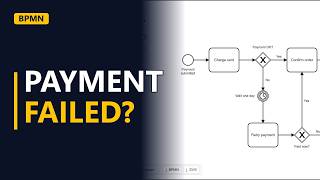
BPMN Gateways Explained: Exclusive vs Parallel vs Inclusive
Exclusive, inclusive or parallel? See what each BPMN gateway means on one online shop example, change the gateway type with the wrench in the free bpmn.io modeler, and join the paths again with the right gateway.
Step by step
Three gateways
- Which gateway?. Exclusive, inclusive or parallel? Pick the wrong gateway and your process says something you never meant. Here's one online shop step that we'll draw with all three.
- New diagram. Start a new diagram in bpmn.io and name the start event order paid.
Exclusive
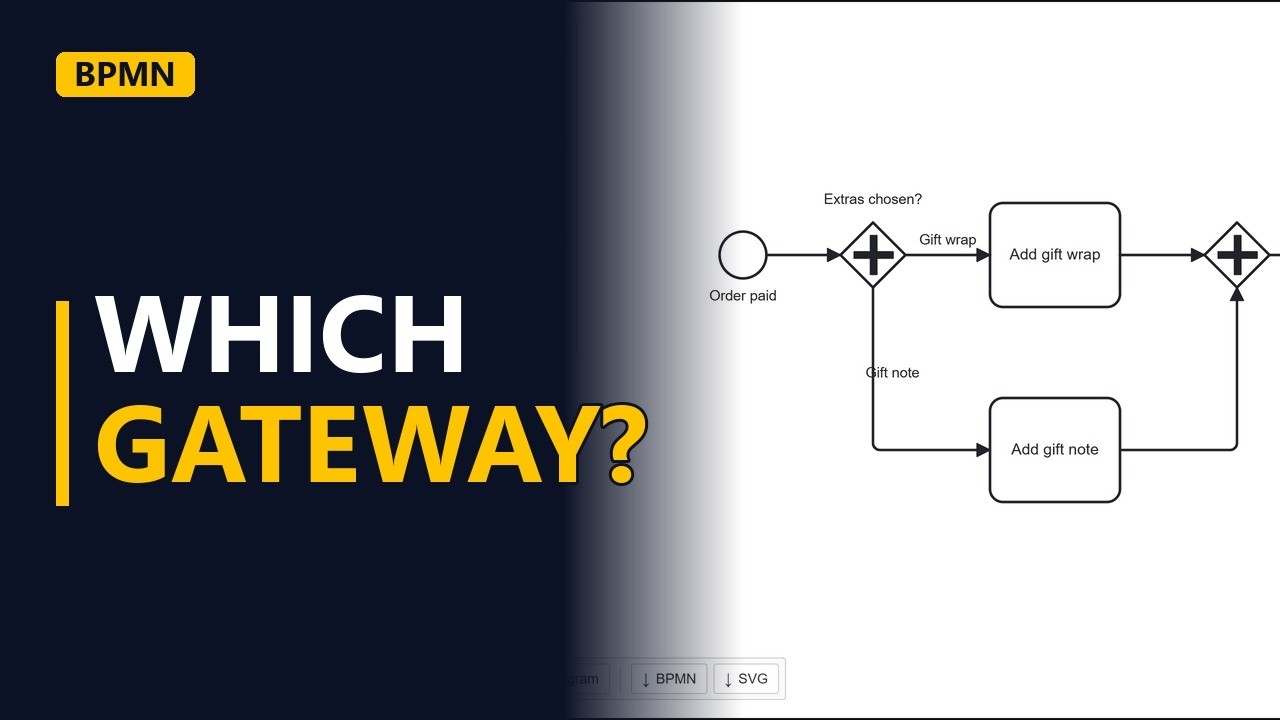
- Exclusive. Click the start event and add a gateway from its menu. A new gateway is exclusive. Ask a question. Extras chosen? Add the first path: a task, add gift wrap. Label its arrow gift wrap. Drag a second task from the gateway's menu to the space below. Add gift note, and label its arrow gift note. The X means exclusive: exactly one path runs. This order gets gift wrap or a gift note, never both. Think either, or.
Inclusive
- Inclusive. But customers can pick both. Click the gateway, then the wrench, and choose inclusive gateway. The X becomes a circle: one or more paths run.
Parallel
- Parallel. Now say every gift order always gets both. Open the wrench again, type parallel, and pick parallel gateway. The plus means all paths run, so the labels are only names.
Join the paths
- Join. Paths that split must join again. Click add gift wrap and add a gateway after it. Connect the second task to it. Click add gift note, pick the arrow tool in its menu, and drag it onto the new gateway. Make the join parallel too. A parallel join waits until both tasks are done before the order moves on.
- End. Finish with an end event after the join. Gifts added.
- The finished model. Click away to see it. A parallel split, two tasks at the same time, and a parallel join.
Recap
- X, circle, plus. So, an X means only one path runs, a circle means one or more, and a plus means all of them. Join with the same type you split with. Subscribe for more BPMN tips for business analysts.